


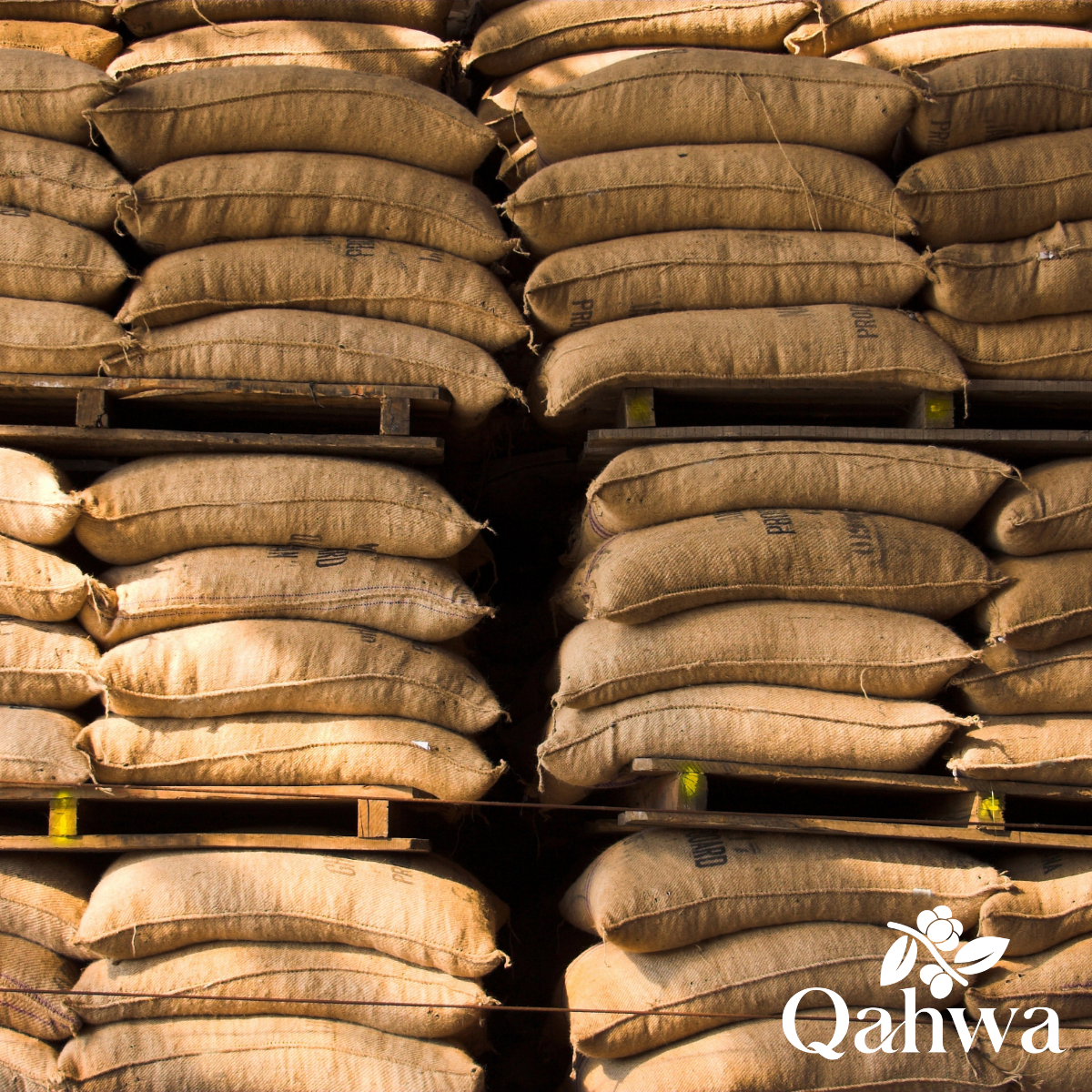
In the green coffee market, planning means finding the right balance. Holding too much stock increases working capital requirements and storage costs. Holding too little can expose a business to less favourable purchasing conditions, logistics delays or lack of immediate availability when coffee is needed. From this perspective, October is a particularly important month.
As the final part of the year approaches, demand tends to increase, companies begin planning operations ahead of the Christmas period and the ability to organise purchases and deliveries becomes even more important. For buyers, therefore, the issue is not simply finding the best price. It is making sure the coffee they need is available when they need it.
Stock is part of the purchasing strategy
In recent years, volatility, weather events and instability across trade routes have shown how risky it can be to treat logistics as a secondary factor. The time required for coffee to move from origin to roastery can vary considerably.
After purchasing at origin, several stages need to be taken into account: lot preparation and quality control, inland transport to the port, vessel availability, transit time, possible transshipments, customs procedures and final transport to the European warehouse. For this reason, time is an economic variable just as much as price.
Waiting for theoretically better market conditions can only be effective if future product availability remains compatible with operational needs.
October and November: a specific phase of the year
Qahwa’s internal data also show an interesting seasonal pattern. Sales remain relatively stable during most of the year, but two periods show stronger activity: one during the summer and, above all, a peak in November. To respond to this increase in demand and ensure deliveries ahead of the holiday period, we increase available volumes in our warehouses during October and November, while keeping stock aligned with projected requirements.
Qahwa’s average stock turnover is approximately 45 days. This highlights an important principle: availability is not created when an order arrives and it needs to be planned in advance.
Availability and price must be considered together
In a volatile market, it is natural to postpone a purchasing decision in the hope of more favourable conditions.
But price is not the only variable.
A buyer needs to consider at the same time: market price; origin differential; lot availability; required volumes; transit times; existing stock coverage; consumption forecasts; continuity of supply.
In other words, the theoretically lowest price is not necessarily the best possible purchase. If the coffee arrives too late for the roaster’s needs, the economic advantage can quickly be absorbed by other costs or operational issues.
The role of European warehousing
This is where physical availability in Europe becomes especially valuable.
Having coffee already stored in a European warehouse removes part of the uncertainty that separates a purchase from final delivery. It does not eliminate market volatility and it does not replace a sourcing strategy but it allows buyers to work with more predictable lead times and manage immediate needs or demand fluctuations with greater flexibility.
For Qahwa, our warehouses in Malta and Slovenia play exactly this role within the supply chain. Coffee is purchased at origin, checked before shipment and inspected again once it reaches our European warehouses before delivery to the customer. Availability, quality control and logistics therefore become part of the same process.
Planning does not mean overstocking
A sound stock strategy does not mean increasing warehouse volumes indiscriminately.
Quite the opposite. The goal is to find the right balance between expected demand, stock turnover and procurement capacity. Efficient stock levels need to be sufficient to guarantee continuity without creating unnecessary working capital exposure. This is particularly relevant in green coffee, where the value of the product is high and market conditions can change rapidly.
Looking beyond the next order
October is therefore a good moment to ask a simple question: how much coffee will actually be needed over the coming weeks?
For a roaster, understanding average consumption, current coverage and planned orders makes it easier to manage the final part of the year with greater predictability. For an importer, it means anticipating demand and organising supply before that demand fully emerges.
At Qahwa, we consider stock, market conditions and logistics as part of the same planning process. Because, especially in an international supply chain, continuity is not built when product is already missing. It is built before.